
Continuing Professional Development Programme
Space for Reflective Learning
The workshop teaches the dichotomy of the scientific process, which consists of both "Day Science", the rigorous testing of ideas with empirical data, and "Night Science", the creative scientific process.
English
Researchers and research support staff
Scientific progress and discovery depend on two distinct but essential modes of thinking: the structured, logical realm of "Day Science" and the creative, intuitive realm of "Night Science". Success in research requires the ability to navigate the interplay between these two modes, yet the creative side is often less formalized.
The objective of this workshop is to bridge this gap, addressing how science actually works by explicitly focusing on the creative and exploratory aspects of the scientific process. The course also aims to foster a supportive environment that encourages risk-taking, vulnerability, and interdisciplinary approaches.
In this course you will:
Sharpen your reasoning skills: logic and critical thinking for scientists
Rhyme your research: using poetry to problem solve and communicate your science
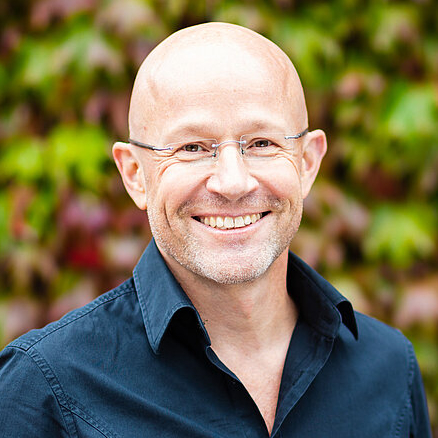
Martin Lercher is a professor at Heinrich Heine University Düsseldorf, where he combines physics, deep learning, and genomics to develop mechanistic models of biological systems. He co-authored The Society of Genes and co-founded the Night Science Institute to advance the teaching of scientific creativity.